
Marketing has changed faster in the last five years than in the previous two decades combined. What used to require large teams, manual reporting, and endless hours of execution is now being handled by intelligent systems.
At the center of this shift are AI marketing tools. These platforms help businesses automate campaigns, optimize performance, generate content, manage ads, and scale growth without increasing workload at the same rate.
From startups to enterprise brands, AI is no longer optional. It is becoming the backbone of modern marketing systems.
What Are AI Marketing Tools?
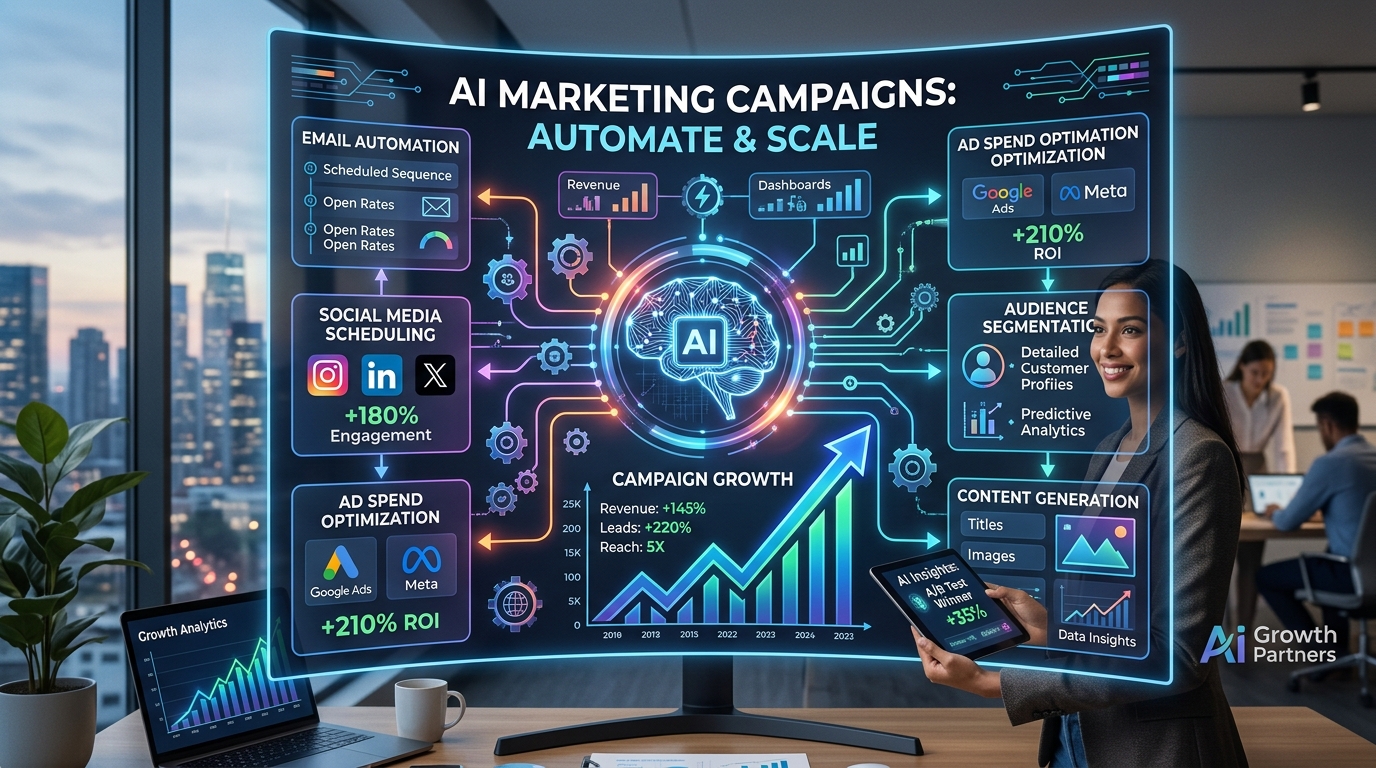
AI marketing tools are software platforms that use artificial intelligence to perform marketing tasks such as:
Content creation
Ad optimization
Email automation
Customer segmentation
Performance analytics
Lead generation
Brand personalization
These tools replace repetitive manual work with automated systems that learn and improve over time.
Modern AI marketing platforms combine multiple functions into one system, allowing businesses to run entire campaigns with minimal human input.
Why AI Marketing Is Growing So Fast
The rise of AI in marketing is driven by three major shifts:
1. Data Overload
Businesses now deal with massive amounts of customer data. AI helps process and analyze it quickly.
2. Need for Speed
Marketing cycles are shorter. AI enables faster campaign creation and optimization.
3. Personalization Demand
Customers expect highly personalized experiences. AI makes this scalable.
Because of these shifts, AI marketing software has become essential for competitive brands.
Types of AI Marketing Tools
1. AI Content Marketing Tools
AI content marketing tools help create blogs, ads, landing pages, and social media posts.
They can generate:
Blog articles
Product descriptions
Ad copy
Email content
Social captions
These tools reduce content production time significantly while maintaining quality and consistency.
2. AI Social Media Tools
AI social media tools automate posting, content planning, and engagement analysis.
Key features include:
Content scheduling
Caption generation
Hashtag suggestions
Engagement tracking
Viral content ideas
These tools are widely used by creators and agencies to maintain consistent posting schedules.
3. AI Advertising Tools
AI advertising tools optimize paid campaigns across platforms like Google Ads, Facebook Ads, and TikTok Ads.
They help with:
Smart bidding strategies
Audience targeting
Ad creative generation
Budget optimization
Performance tracking
This reduces wasted ad spend and improves ROI.
4. AI Email Marketing Tools
AI email marketing tools improve open rates and conversions by personalizing email campaigns.
They can:
Write subject lines
Segment audiences
Automate sequences
Predict best send times
Optimize click-through rates
This allows businesses to run highly targeted campaigns at scale.
5. AI Lead Generation Tools
AI lead generation tools help identify and capture potential customers automatically.
They use AI to:
Analyze user behavior
Score leads
Capture contact data
Automate outreach
Improve conversion rates
These tools are especially useful for B2B businesses.
6. AI Analytics Tools
AI analytics tools turn raw data into actionable insights.
They provide:
Customer behavior analysis
Campaign performance reports
Predictive analytics
Conversion tracking
ROI insights
Instead of manual reporting, AI delivers real-time intelligence.
7. AI Branding Tools
AI branding tools help maintain consistent brand identity across platforms.
They assist with:
Logo design suggestions
Brand voice generation
Visual identity systems
Content tone optimization
This ensures brand consistency across all marketing channels.
8. AI Campaign Automation Tools
AI campaign automation platforms are designed to run entire marketing workflows automatically.
They handle:
Multi-channel campaigns
Audience targeting
Scheduling
Content distribution
Performance optimization
These tools reduce manual effort and improve campaign efficiency.
How AI Marketing Tools Help Scale Campaigns
1. Faster Content Production
AI tools generate content in seconds instead of hours, allowing brands to publish more frequently.
2. Smarter Targeting
AI analyzes customer behavior to deliver more accurate targeting across ads and emails.
3. Cost Efficiency
Automation reduces the need for large teams and lowers operational costs.
4. Improved Conversion Rates
AI continuously optimizes campaigns based on performance data.
5. Real-Time Optimization
Instead of waiting for reports, AI adjusts campaigns instantly.
How to Use AI Marketing Tools Step-by-Step
Step 1: Define Your Goal
Start with clear objectives such as:
More leads
Higher sales
Brand awareness
Website traffic
Step 2: Choose the Right AI Marketing Software
Select tools based on your needs:
Content creation tools
Ad automation platforms
Email automation systems
Step 3: Set Up Campaign Structure
Organize:
Target audience
Content themes
Budget allocation
Channels
Step 4: Generate Content with AI
Use AI tools to create:
Ads
Emails
Social posts
Landing pages
Step 5: Automate Distribution
Schedule and distribute content using automation tools.
Step 6: Monitor Performance
Track:
Engagement
Conversions
Click-through rates
ROI
Step 7: Optimize Campaigns
Use AI insights to improve targeting, messaging, and budget allocation.
Benefits of AI Marketing Platforms
1. Centralized Management
All campaigns can be managed from a single dashboard.
2. Time Savings
Reduces hours of manual work.
3. Scalable Growth
Businesses can scale without increasing workload significantly.
4. Better Decision Making
AI provides data-driven insights instead of guesswork.
5. Higher ROI
Optimized campaigns lead to better returns on investment.
Challenges of AI Marketing Tools
Despite their advantages, there are some challenges:
1. Learning Curve
Some tools require initial setup and training.
2. Over-Automation
Too much automation can reduce creativity if not balanced properly.
3. Data Dependency
AI performance depends on the quality of input data.
Future of AI Marketing Tools
The future of AI marketing platforms is highly advanced and integrated.
Upcoming trends include:
Fully autonomous campaigns
Predictive customer journeys
Hyper-personalized content
AI-generated video ads
Voice-based marketing automation
AI will not just assist marketing. It will manage entire marketing ecosystems.
Conclusion
AI marketing tools are transforming how businesses operate, allowing them to automate tasks, scale campaigns, and improve performance without increasing workload.
From AI content marketing tools and AI social media tools to AI advertising tools, AI email marketing tools, and AI analytics tools, every part of marketing can now be optimized with artificial intelligence.
Businesses that adopt AI early gain a significant competitive advantage in speed, efficiency, and ROI.
The future of marketing is not manual. It is intelligent, automated, and AI-driven.
FAQs
1. What are AI marketing tools?
AI marketing tools are software solutions that use artificial intelligence to automate marketing tasks like content creation, ads, emails, and analytics.
2. How do AI marketing software platforms work?
They analyze data, generate insights, and automate marketing processes such as targeting, content creation, and campaign optimization.
3. Are AI content marketing tools useful for small businesses?
Yes, they help small businesses create high-quality content quickly without hiring large marketing teams.
4. What are AI social media tools used for?
They are used for scheduling posts, generating captions, analyzing engagement, and improving social media performance.
5. Can AI advertising tools improve ROI?
Yes, they optimize ad targeting, bidding, and creatives to reduce costs and improve conversions.
6. What are AI email marketing tools?
These tools automate email campaigns, personalize messages, and improve open and click-through rates.
7. Do AI analytics tools replace marketers?
No, they assist marketers by providing insights and data-driven recommendations.
8. What is AI campaign automation?
It is the use of AI to manage and optimize entire marketing campaigns automatically.
9. Are AI marketing platforms expensive?
Some are premium, but many affordable options exist for startups and small businesses.
10. What is the future of AI marketing tools?
They will become more autonomous, predictive, and capable of managing entire marketing systems with minimal human input.
Read Also: How to Report Marketing: The Complete 2026 Guide.
Found this helpful? Share it with others who might benefit from these insights!
Submit Your AI Tool